
Blog,
Insights &
Articles
Cryopreservation: Both Science and Art
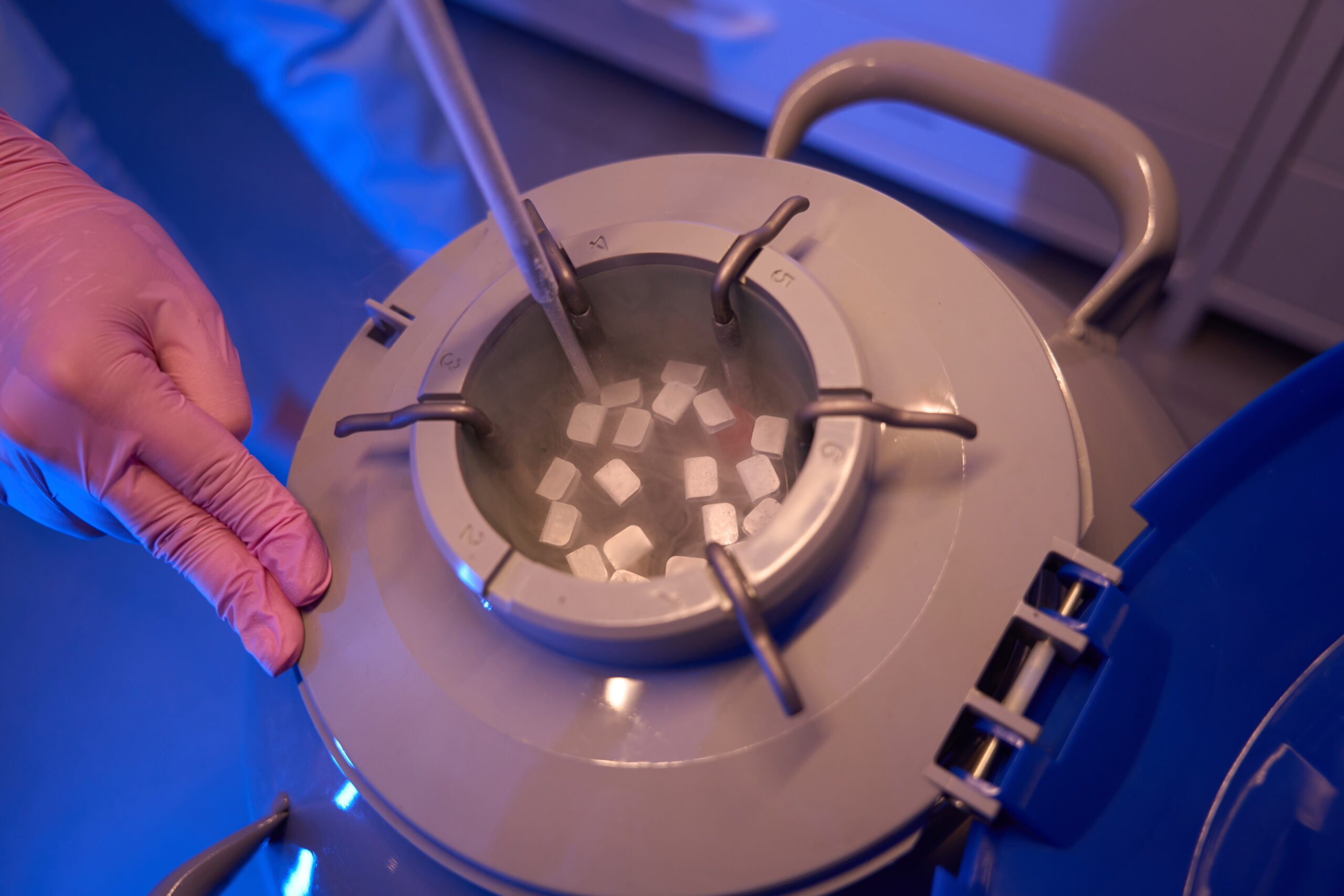
The future of science relies on the practice of cryopreservation. This method of ultra low cooling has the ability to empower research endeavors that would otherwise be impossible. Whether you’re working with stem cells for regenerative medicine, reproductive cells for fertility treatments, or long-term research samples, cryopreservation has become a cornerstone of modern science. But preserving life at cryogenic temperatures—often below -150°C—is as much art as it is science.
Let’s explore how leading laboratories keep their samples at peak with best practices for cryo storage and how to avoid the thaw that no researcher wants to face.
Intro to Cryogenic Storage
By definition, cryopreservation is the process of cooling and storing biological material at ultra-low or cryogenic temperatures. This process halts biochemical activity and preserves sample integrity. But cryopreservation isn’t just about dropping vials in a tank and hoping for the best. The right cryo storage method—paired with the right equipment—is critical for preserving viability, reducing ice crystal damage, and maintaining regulatory compliance.1
The First Step: Choosing the Right Equipment
When it comes to cryopreservation and ultra low freezing, start with your equipment. Your equipment will guide your whole preservation process. Your process will also depend on what you’re preserving—and for how long. Let’s take a look at some of the different equipment types used for ultra low storage such as ULTs, traditional cryo storage, Isothermal freezers, and more. Each method of storage is tailored for different applications:
Ultra Low Temperature Freezers (ULTs) vs. Traditional Cryo Storage
An ultra low temperature freezer differs from a cryogenic tank in that it typically operates between -80°C and -86°C. It also does not use liquid nitrogen for cooling. ULTs are essential for short- to medium-term storage of biospecimens such as plasma, DNA, RNA, and some cell lines.
However, ULTs are not designed for long-term storage in the same way that cryogenic tanks are. In addition, their temperatures do not get as low as with cryogenic tanks which often reach temperatures below -150°C. Traditional cryogenic tanks are the most common choice for storing samples at these extremely low temperatures.
Isothermal Freezers: Liquid Nitrogen Without the Splash
Isothermal freezers deliver all the benefits of traditional cryogenic storage but with enhanced safety and function. Unlike traditional LN₂ freezers that store samples directly in liquid nitrogen, isothermal freezers use a jacketed LN₂ layer that blankets the storage chamber without making direct contact with the samples. This provides a consistent cryogenic environment around -190°C while eliminating risks like cross-contamination and splash hazards. Plus, temperatures remain more uniform for sample health and safety.
Isothermal freezers are ideal for high-value specimens that require long-term cryo storage, such as stem cells, cord blood, and genetically modified cell lines. CBS is the sole manufacturer of these sought-after freezers. You can discover more about them here.
Controlled Rate Freezers: Gentle Transitions for Fragile Samples
Cryopreservation isn’t just about the final temperature—it’s about how you get there. Controlled rate freezers gradually lower the temperature to prevent intracellular ice formation, which can destroy delicate cells during freezing.
These freezers are crucial for:
- Cell therapy products
- Embryos and oocytes
- CAR-T cells and other advanced biologics
Controlled Rate Freezers are often used in combination with isothermal or LN₂ storage systems for a comprehensive cryo storage workflow. These freezers are the best-in-class for preserving the highest level of cellular integrity and minimizing damage while taking samples down to cryogenic levels. Sound like something you need? Explore more about what they do and how they can help.
Best Practices for Cryopreservation Success
Whatever you’re storing, follow these best practices to maintain sample viability and protect your research during cryogenic work:
Use Cryoprotectants Wisely
Cryoprotective agents (CPAs) help prevent ice damage during the freezing process—but must be used at precise concentrations to avoid toxicity. Always validate protocols for each cell type.
Pre-cool and Monitor
Samples should be cooled to their target storage temperature before transfer. Continuous temperature monitoring with real-time alarms is a must-have in any cryo storage unit. Controlled Rate Freezers can help with this, especially when dealing with valuable or sensitive samples.
Minimize Lid Openings
Every second counts when you open a cryo tank. Organize your cryo boxes or canes by usage frequency, and store like with like to cut down search time and avoid temperature excursions.
Regular Maintenance
Cryogenic equipment requires routine maintenance. Clean your unit, check hoses, monitor LN₂ levels and verify system performance systematically to ensure your unit keeps temperature and stays performing at peak.
The Future Is Frozen
Cryopreservation isn’t just a storage method—it’s a bridge to the future. Whatever you’re preserving, reliable cryo storage is non-negotiable. With advanced equipment available in the modern marketplace, laboratories today are better equipped than ever to meet the challenge. Explore the unique cryogenic storage offered to you at CBS and how to take your laboratory operations to the next level of performance.
So next time you walk past that unassuming cryo tank in the corner of your lab, remember: It’s not just cold storage. It’s the preservation of possibility.

Technical Writer and Marketing Editor
Christine works as a Technical Writer for Standex Scientific. She holds a B.A. in Creative Writing and has used her writing expertise in various companies from engineering firms to non-profits.